What?
WEAN SAFE (WorldwidE AssessmeNt of Separation of pAtients From ventilatory assistancE) is a multi-centre, prospective, observational, 4-week inception cohort study being carried out by the Acute Respiratory Failure section of ESICM. Weaning represents a challenge for intensivists and patients spend a considerable amount of time in being liberated from mechanical ventilation. While guidelines do exist on the classification of weaning, a recent study has shown that these may not be applicable to all patients. Moreover, different practices exist in regard to weaning procedures. WEAN SAFE will prospectively assess the burden of, management and spectrum of approaches to weaning from ventilation, in patients that require invasive mechanical ventilation for any reason, for a time period of at least 24 hours.
When?
The study has been performed over a 4 week period between October 1st 2017 and May 31st 2018 in ICUs across the world.
Co-Principal Investigators
Giacomo Bellani, A.O. San Gerardo, Monza, University of Milan Bicocca, Italy
John Laffey, Departments of Anesthesia and Critical Care Medicine, Anaesthesia, School of Medicine, National University of Ireland Galway, Ireland.
The Wean Safe group is delighted to share all the WEAN SAFE associated publications:
Update 10 September 2026:
1. Caldecott R, Zhu Y, McNicholas BA, Rezoagli E, Taran S, Pham T, Heunks L, Bellani G, Brochard L, Simpkin AJ, Laffey JG; WEAN SAFE Investigators. Distinct weaning phenotypes in patients unsuccessful in weaning from invasive mechanical ventilation: a secondary analysis of the WEAN SAFE cohort. Intensive Care Med. 2026 Sep 9. doi: 10.1007/s00134-026-08592-2. Epub ahead of print. PMID: 42714473.
2. Caldecott R, Laffey K, Khazaei O, Zhu Y, McNicholas BA, Rezoagli E, Pham T, Heunks L, Bellani G, Brochard L, Simpkin AJ, Dres M, Navalesi P, Laffey JG; WEAN SAFE Investigators. Management and outcomes in women and men weaning from invasive mechanical ventilation: insights from the WEAN SAFE study. Ann Intensive Care. 2026 Feb 20;16:100037. doi: 10.1016/j.aicoj.2026.100037. PMID: 41938899; PMCID: PMC13045549.
3. Bell A, Kuriyama A, Khazaei O, McNicholas BA, Pham T, Heunks L, Bellani G, Brochard L, Simpkin AJ, Laffey JG; WEAN SAFE Investigators. Does obesity impact on weaning from invasive ventilation: a secondary analysis of the WEAN SAFE study. Ann Intensive Care. 2025 Oct 21;15(1):164. doi: 10.1186/s13613-025-01586-1. PMID: 41116142; PMCID: PMC12537622.
4. Khazaei O, Laffey CM, Sheerin R, McNicholas BA, Pham T, Heunks L, et al. Impact of comorbidities on management and outcomes of patients weaning from invasive mechanical ventilation: insights from the WEAN SAFE study. Crit Care. 2025 Mar 13;29(1):114.
5. Laffey CM, Sheerin R, Khazaei O, McNicholas BA, Pham T, Heunks L, et al. Impact of frailty and older age on weaning from invasive ventilation: a secondary analysis of the WEAN SAFE study. Ann Intensive Care. 2025 Jan 20;15(1):13.
6. Reep CAT, Wils EJ, Fleuren LM, Breskin A, Bellani G, Laffey JG, et al. Early vs. Delayed Switching from Controlled to Assisted Ventilation: A Target Trial Emulation. Am J Respir Crit Care Med. 2025 Jan 21;
7. Pham T, Heunks L, Bellani G, Madotto F, Aragao I, Beduneau G, et al. Weaning from mechanical ventilation in intensive care units across 50 countries (WEAN SAFE): a multicentre, prospective, observational cohort study. Lancet Respir Med. 2023 Jan 20;S2213-2600(22)00449-0.
Our OPEN WEAN SAFE policy is available here, which provides further details on the evaluation process for proposals. A study proposal form is available HERE, and must be used for all such proposals.
Any questions? please write to jlaffey@universityofgalway.ie Call for Sub-Studies — Now Closed
The formal call for WEAN SAFE sub-study proposals is now closed. However, the Steering Committee will continue to consider ad hoc applications for use of the WEAN SAFE dataset on a case-by-case basis. Investigators interested in submitting an ad hoc proposal are welcome to contact the WEAN SAFE team directly.
Appendix: List of approved WEAN SAFE sub-studies (Stage 1, 2 and 3 calls)
Note: In each of the above studies, analyses are ongoing and nearing completion at the present time.
Where overlapping proposals are received, we will work with the teams that propose them to determine how best to combine these proposals.
Our OPEN WEAN SAFE policy is available here, which provides further details on the evaluation process for proposals. A study proposal form is available HERE, and must be used for all such proposals.
Any questions? please write to john.laffey [at] universityofgalway.ie
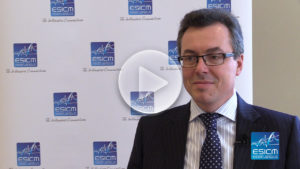
In this icTV interview (March 2018), John Laffey discusses the progress of WEAN SAFE study and encourages centres to get actively involved in this important ESICM Trials Group initiative.
For more information, please contact research@esicm.org
