
From competence to entrustment: strengthening clinical autonomy within the ESICM educational framework
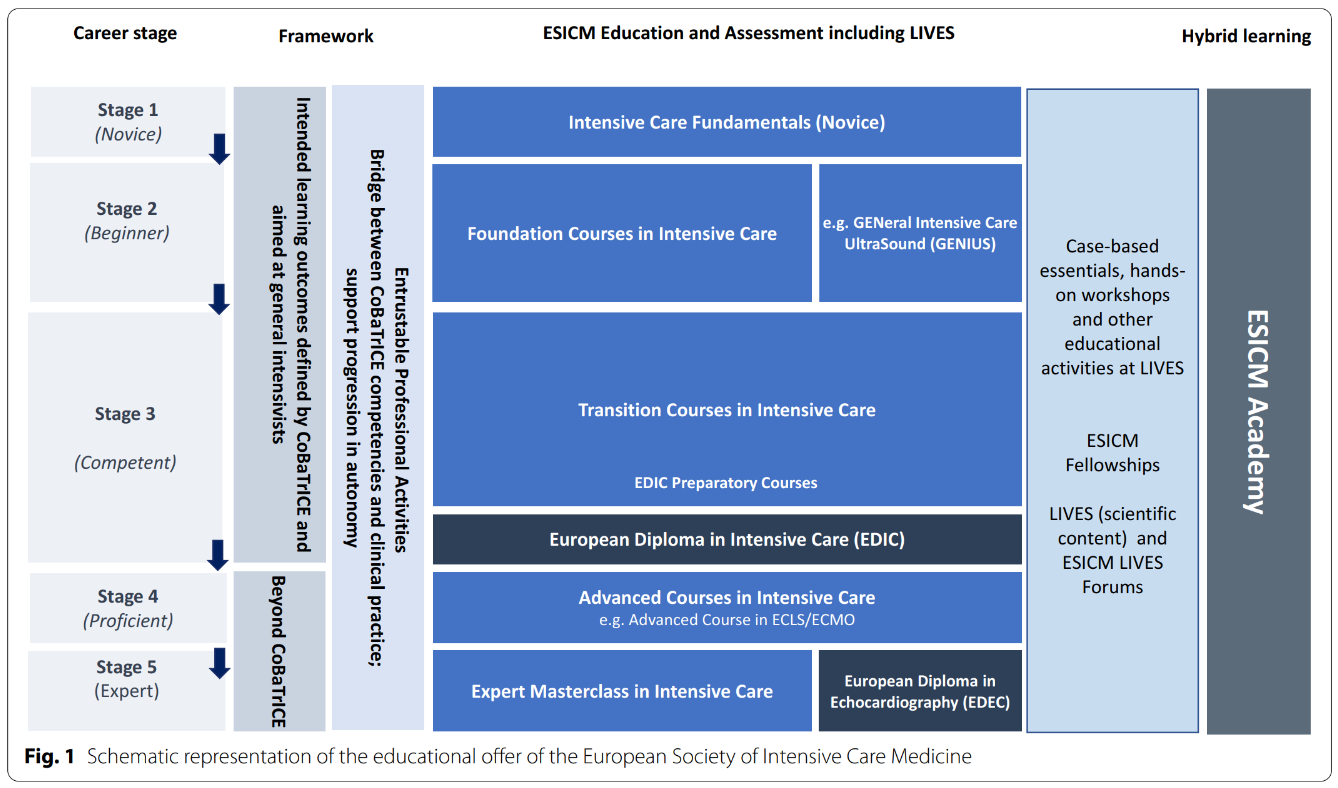
What does it really mean for a trainee to be ready for independent practice? A new scientific letter published in Intensive Care Medicine argues that knowing the material isn’t the same as being trusted to act on it — and that ESICM’s educational framework is evolving to reflect that distinction.
The article traces how ICM training has moved from the competency-based foundations of CoBaTrICE and the summative assessment of the European Diploma in Intensive Care (EDIC), toward a complementary model built on Entrustable Professional Activities (EPAs). Rather than asking only “does this trainee know how to manage haemodynamic instability?”, EPAs ask whether a supervisor can safely entrust them to do it — with a defined, progressively decreasing level of supervision.
The piece outlines ESICM’s structured EPA development project, from phased design and quality control to curriculum alignment and pilot testing, and reflects on the faculty development and cross-country dialogue needed to ensure consistent entrustment decisions across Europe’s diverse training systems.
For anyone involved in postgraduate ICM training — programme directors, supervisors, or trainees themselves — this is a timely look at where assessment in intensive care is heading.