Broadcast on LIVES-STREAM – 16:00 – 17:00 CEST

Infection Management
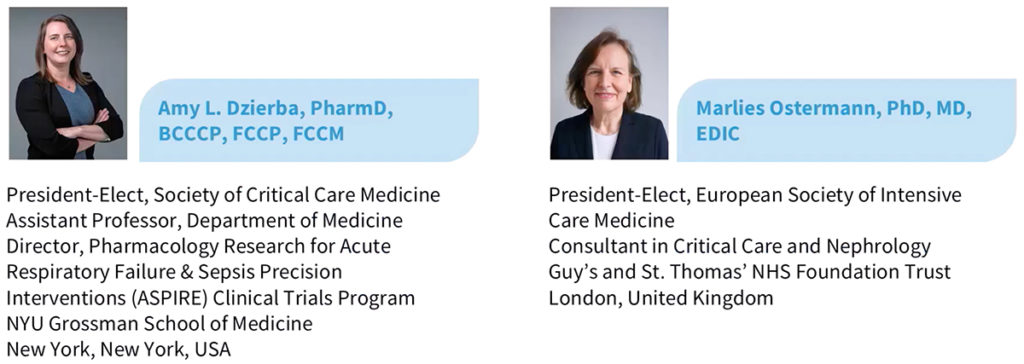
Marlies Ostermann, Jan De Waele, Joost Wiersinga

Haemodynamic & Fluid Management.
Daniel De Backer, Flavia Machado, Yaseen Arabi

Respiratory Support & Adjunctive Therapies.
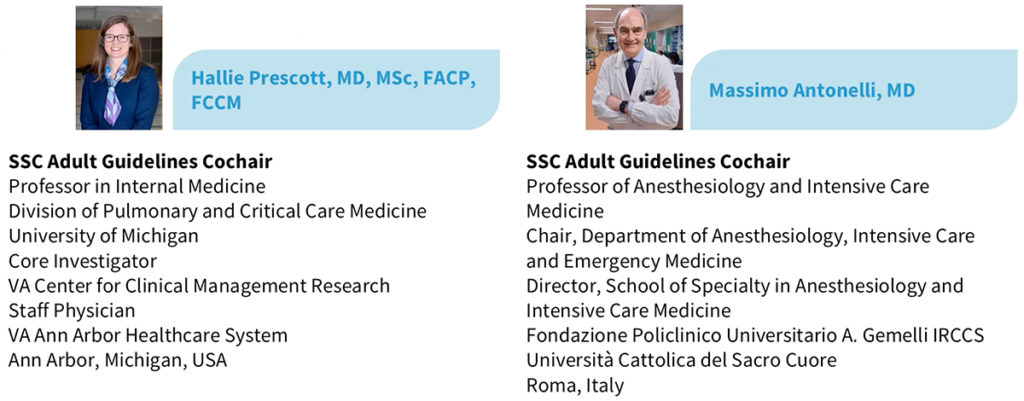
Massimo Antonelli, Marlies Ostermann, Maurizio Cecconi

The patient perspective.
Elie Azoulay, Lennie Derde, Dana Mirman & Jackie Duda
Learn about what’s new in the treatment of adults and children with sepsis and septic shock in these two free webcasts.
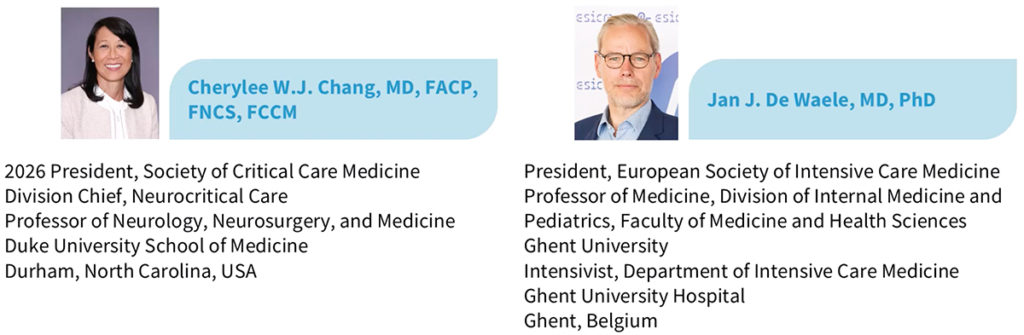
Dive into the newly updated Surviving Sepsis Campaign (SSC) guidelines through these two comprehensive webcasts. In these sessions, the guideline co-chairs walk through the latest recommendations—updated to reflect new clinical evidence since the previous edition—and discuss how these changes influence the recognition and management of sepsis and septic shock in everyday clinical practice.
Developed by international expert panels representing diverse backgrounds across all continents—and incorporating the perspectives of patients and families—the updated guidelines reflect a truly global approach to supporting optimal care worldwide.
The adult guidelines are published in Critical Care Medicine and Intensive Care Medicine and are endorsed by 24 professional organisations.
The paediatric guidelines are published in Intensive Care Medicine and Pediatric Critical Care Medicine and are endorsed by 14 professional organisations, highlighting the strong international collaboration behind these recommendations.
Beyond highlighting what’s new, the webcasts also explore how to interpret and apply the recommendations effectively in clinical practice, including important considerations for adapting care in low-resource settings. Participants will gain a clear understanding of the guideline updates, the evidence behind them, and practical strategies to help improve outcomes for patients with sepsis and septic shock
ABOUT THE SURVIVING SEPSIS CAMPAIGN
The Surviving Sepsis Campaign (SSC) is a joint initiative of the European Society of Intensive Care Medicine (ESICM) and the Society of Critical Care Medicine (SCCM), led by multiprofessional international experts committed to reducing mortality and morbidity from sepsis and septic shock, the leading causes of death worldwide. The SSC advances evidence-based guidance, education, and global collaboration to improve the recognition and treatment of sepsis and septic shock across diverse care settings.
Learn more at survivingsepsis.org and follow the SSC on Facebook.
Sepsis and septic shock are leading causes of death worldwide. The international Surviving Sepsis Campaign (SSC) is a joint initiative of the European Society of Intensive Care Medicine (ESICM) and the Society of Critical Care Medicine (SCCM). The SSC is led by multidisciplinary international experts committed to improving the time to recognition and treatment of sepsis and septic shock. Initiated in 2002 at the ESICM’s annual meeting with the Barcelona Declaration, the campaign progressed has several aims, including the development of guidelines for diagnosis, treatment and post-ICU care of sepsis and a reduction of mortality from sepsis.
Definitions for sepsis and septic shock were last revised in 2016. The resulting publications can be found below.
The updated adult sepsis guidelines represent input from a diverse panel of 60 experts and a survey of more than 800 intensivists from more than 30 countries. The guidelines recommend involving patients and their families in goals-of-care discussions to treat the long-term effects of sepsis.
Guidelines Access
The Surviving Sepsis Campaign (SSC) has updated the previously released Guidelines on the Management of Critically Ill Adults with Coronavirus Disease 2019 (COVID-19).
The panel issued nine statements related to ICU patients with severe or critical COVID-19. Several of the original recommendations remain current.
Guidelines Access
Access the original guidelines, published in June 2020, here.
This guideline is updated regularly as new evidence becomes available.
The guidelines were developed to help improve care for children from birth to age 18. While the condition is more common in adults, 1.2 million children develop sepsis globally every year. Sepsis can be overlooked in children because low blood pressure (a sign of septic shock) may not occur until very late in the illness. For this reason, the guidelines recommend each institution implement screening and protocols to facilitate timely recognition and treatment for children with sepsis and septic shock.
ESICM has released The Surviving Sepsis Campaign Bundle: 2018 update (Free Access) in our official journal Intensive Care Medicine.
Additionally, we have prepared a short animation video to highlight the five steps of the Hour-1 Bundle that healthcare providers are recommended to begin as soon as sepsis is recognised.
More information and the video are available here.
Rhodes A. et al. Surviving Sepsis Campaign: International Guidelines for Management of Sepsis and Septic Shock: 2016.
Webinars replays and podcasts are available for members & non-members on the ESICM LIVES-STREAM
SEPSIS, SEVERE INFECTIONS AND STEWARDSHIP PATHWAY
A structured ESICM education pathway combining centralised learning with country-tailored activities, supporting intensive care professionals in infection management, sepsis, and antimicrobial stewardship (AMS).