
ICMx – Article of the week
Post-treatment with H12-(ADP)-liposomes after LPS challenge ameliorated coagulopathy and critical organ injury in rats
Authors: Kohsuke Hagisawa, Osamu Ishida, Hiroyuki Nakashima, Shinji Takeoka, Yuji Morimoto, Manabu Kinoshita
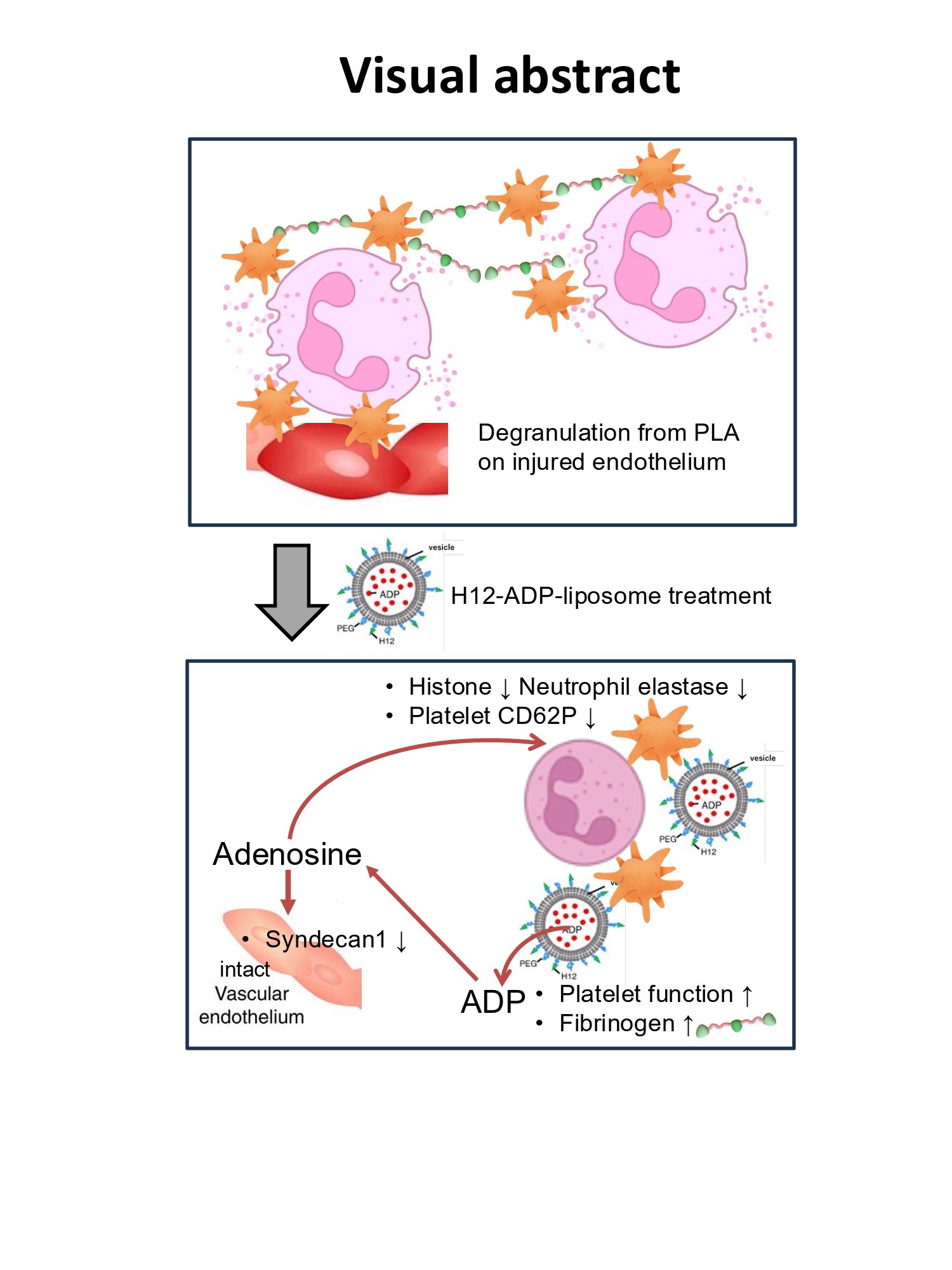
H12-(ADP)-liposomes, composed of fibrinogen γ-chain peptide-coated liposomes encapsulating adenosine diphosphate (ADP), have been shown to enhance platelet aggregation through glycoprotein IIb/IIIa receptors on activated platelets while also exerting tissue-protective effects through ADP metabolism to adenosine. In this experimental study, the therapeutic efficacy of post-treatment with H12-(ADP)-liposomes was evaluated in a rat model of lipopolysaccharide (LPS)-induced coagulopathy and critical organ injury. Rats received either H12-(ADP)-liposomes or saline four hours after LPS administration. Treatment with H12-(ADP)-liposomes shortened coagulation time, reduced platelet activation, normalised markers of neutrophil activation and neutrophil extracellular trap formation, and attenuated histological lung and kidney injury.
Moreover, H12-(ADP)-liposome treatment significantly improved survival compared with vehicle-treated animals. These findings suggest that post-treatment with H12-(ADP)-liposomes mitigates LPS-induced coagulopathy and inflammatory responses, thereby reducing critical organ injury and improving survival in experimental endotoxemia.