
ICMx – Article of the week
Femoral vein Doppler ultrasound for assessing venous congestion and right heart function: a scoping review
Authors: Rafael Hortêncio Melo, Adrian Wong, Abhilash Koratala, Eduardo Kattan, Rogério da Hora Passos
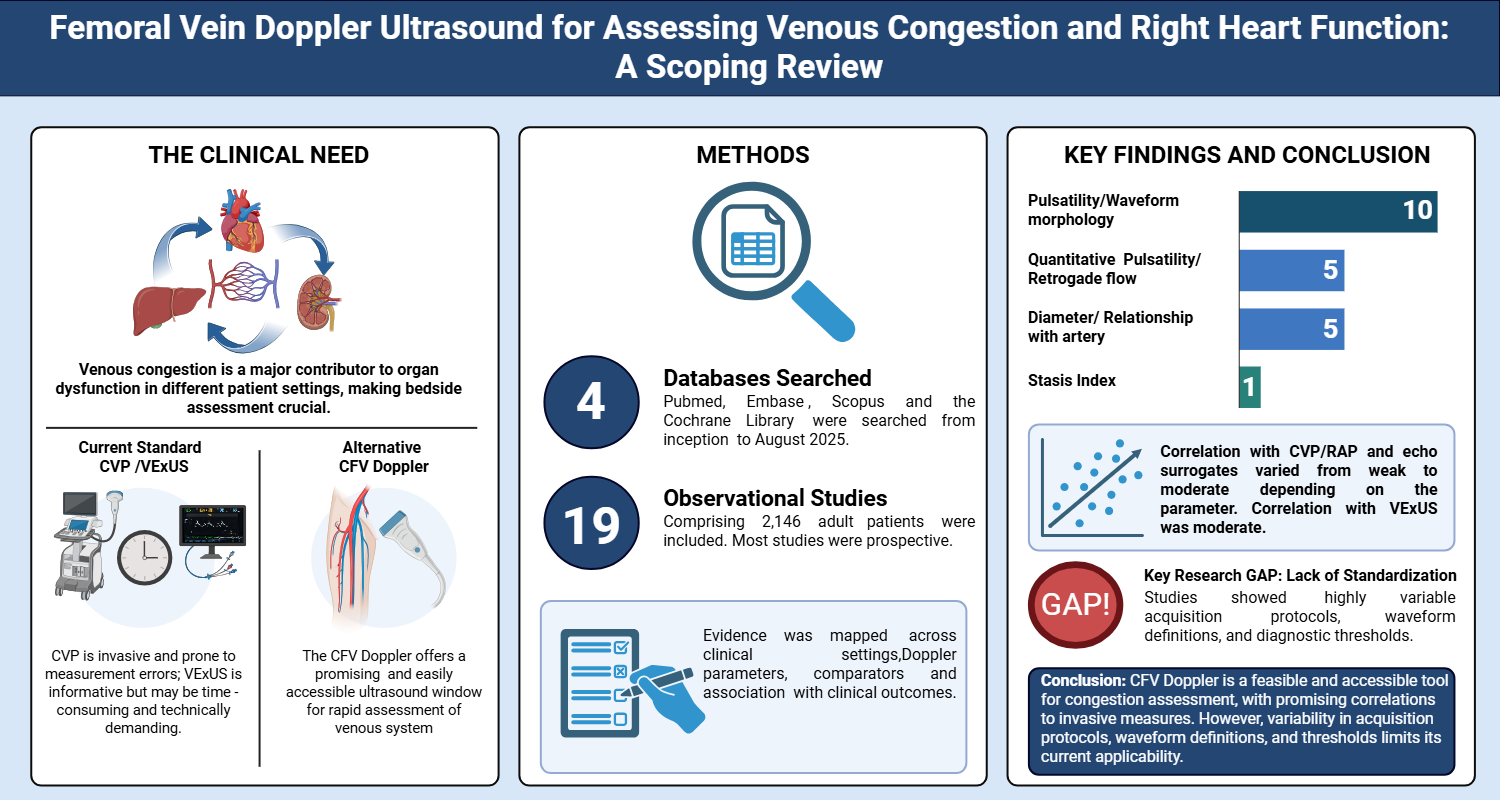
Venous congestion plays a key role in organ dysfunction in critically ill and perioperative patients. While Doppler-based ultrasound approaches such as VExUS are increasing, assessment of the common femoral vein (CFV) provides a simple, easily accessible alternative for evaluating venous congestion, cardiac function, and intravascular volume status. This scoping review aims to map and synthesise the existing evidence on the use of CFV Doppler ultrasound across perioperative, intensive care, heart failure, and emergency settings, following PRISMA-ScR methodology.
The review included 19 observational studies comprising 2,146 adult patients. Most studies evaluated CFV pulsatility, waveform morphology, or diameter and compared these measures with invasive central venous pressure or echocardiographic surrogates, showing weak-to-moderate correlations. Only a limited number examined clinical outcomes, with abnormal CFV patterns variably associated with postoperative complications and, in ICU populations, longer length of stay or mortality. Overall, CFV Doppler appears feasible and promising for congestion assessment. However, substantial heterogeneity in acquisition protocols, definitions, and thresholds limits current clinical applicability, highlighting the need for standardised methods and prospective validation.