ICU resilience, stress and support survey
Are our ICUs ready for the next crisis?
An ESICM survey of 627 ICU professionals from 58 countries, published in Intensive Care Medicine, reveals limited progress in crisis preparedness and highlights the need for better training, clearer protocols, and stronger coordination.
Key findings:
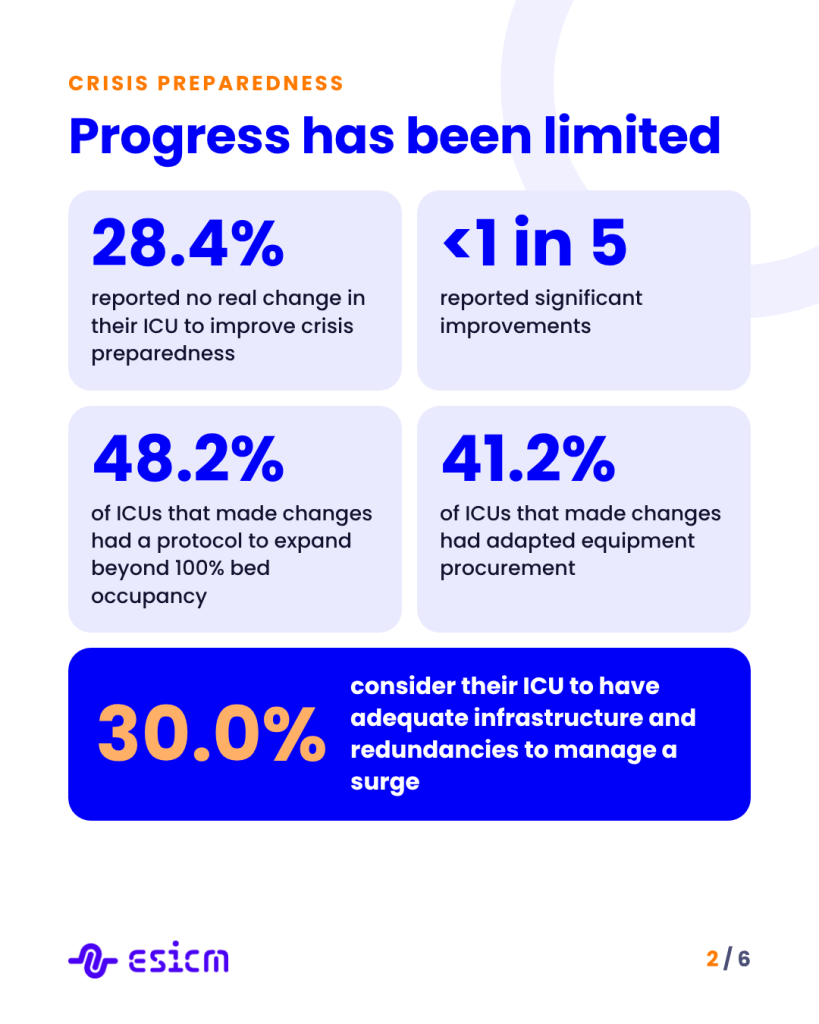
- 28.4% reported no improvement in crisis preparedness.
- Only 30% considered their ICU adequately prepared for a patient surge.
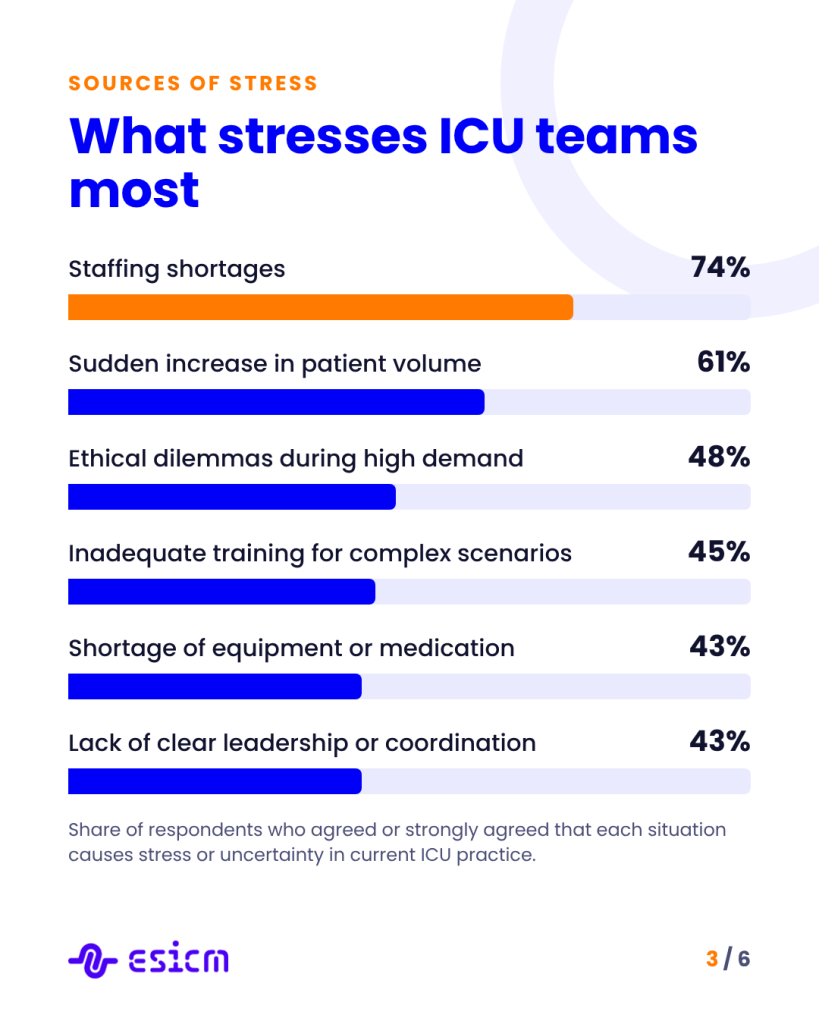
- Staffing shortages (74%) and sudden increases in patient volume (61%) were the main sources of stress.
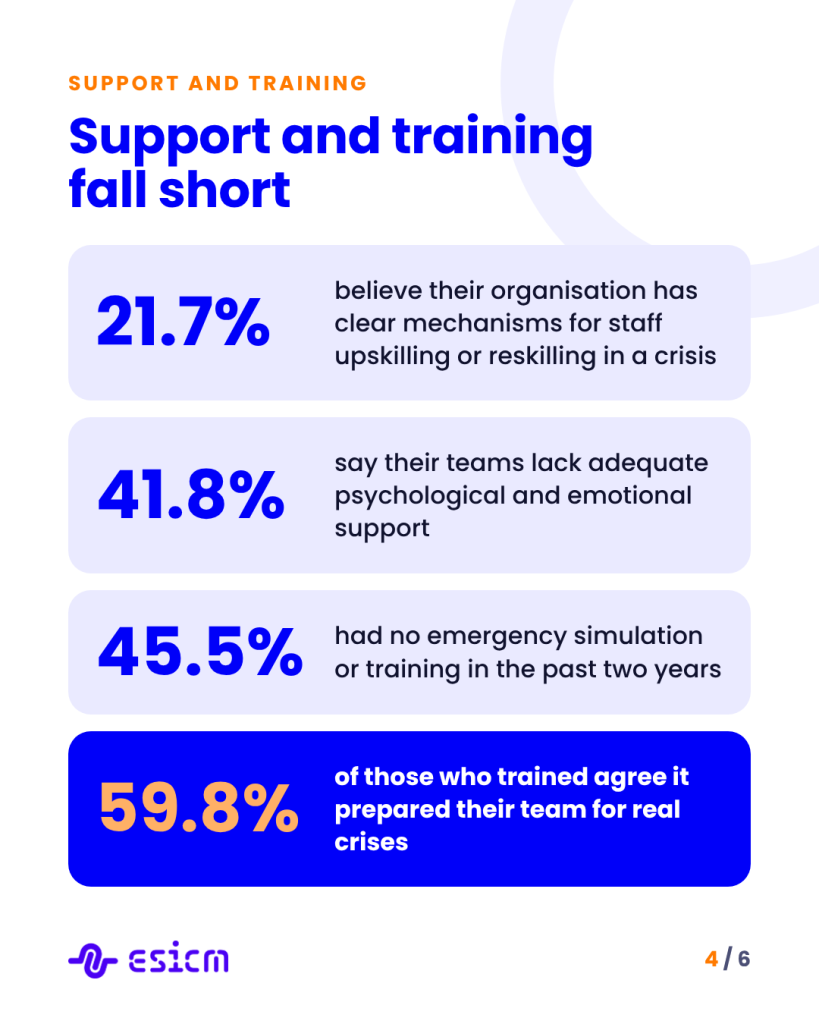
- 45.5% had not participated in emergency simulation or training in the previous two years.
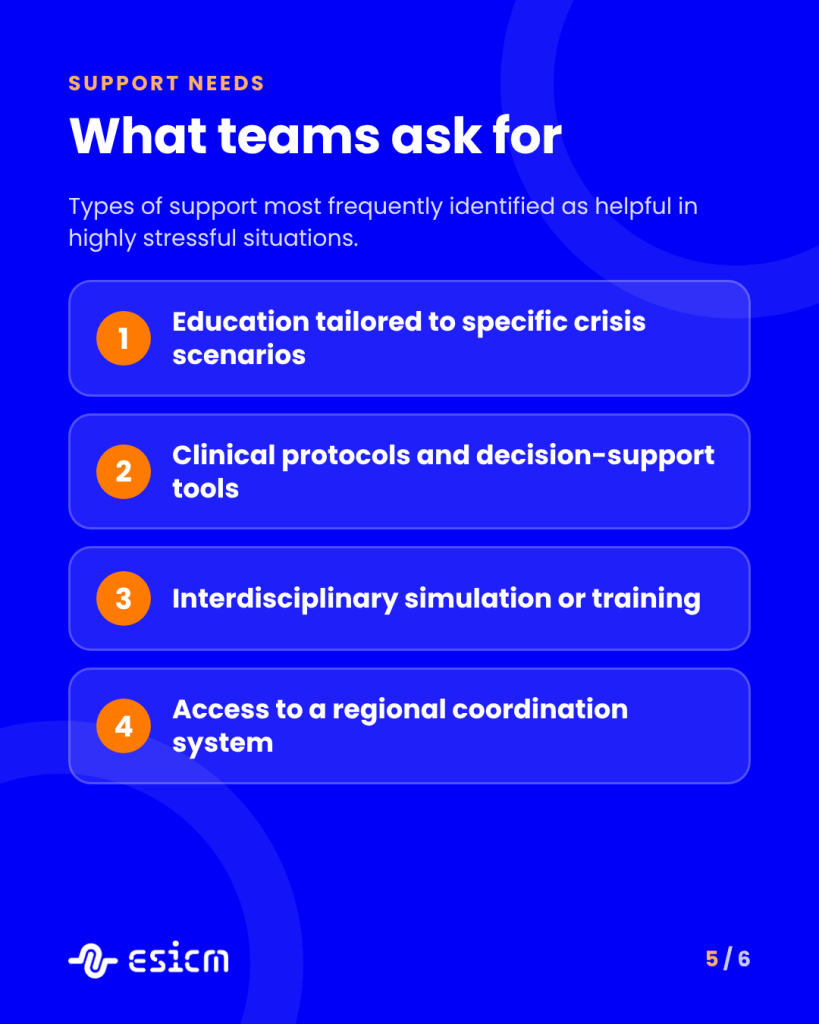
- Teams identified scenario-based education, clinical protocols, simulation and regional coordination as key priorities.
Strengthening ICU preparedness
The findings highlight the need to invest in workforce development, psychological support, interdisciplinary training and coordinated crisis response.
ESICM considers a coordinated European intensive care preparedness framework a priority for the coming years, supporting common standards for surge planning, training and resource allocation.
Although the survey was conducted in a predominantly European context, the authors note that the findings have broader international relevance and may contribute to global discussions on intensive care preparedness, workforce sustainability and health system resilience..
ICU resilience, stress and support survey