
ICMx – Article of the week
Sepsis-induced endothelial glycocalyx disruption and remodeling: an ultrastructural study in mice
Authors: Ryo Hisamune, Kazuma Yamakawa, Hong Wu, Yoshihiko Fujioka, Katsuhide Kayano, Noritaka Ushio, Rintaro Oide, Masahiro Terasawa, Koji Suzuki, Takashi Nakano & Akira Takasu
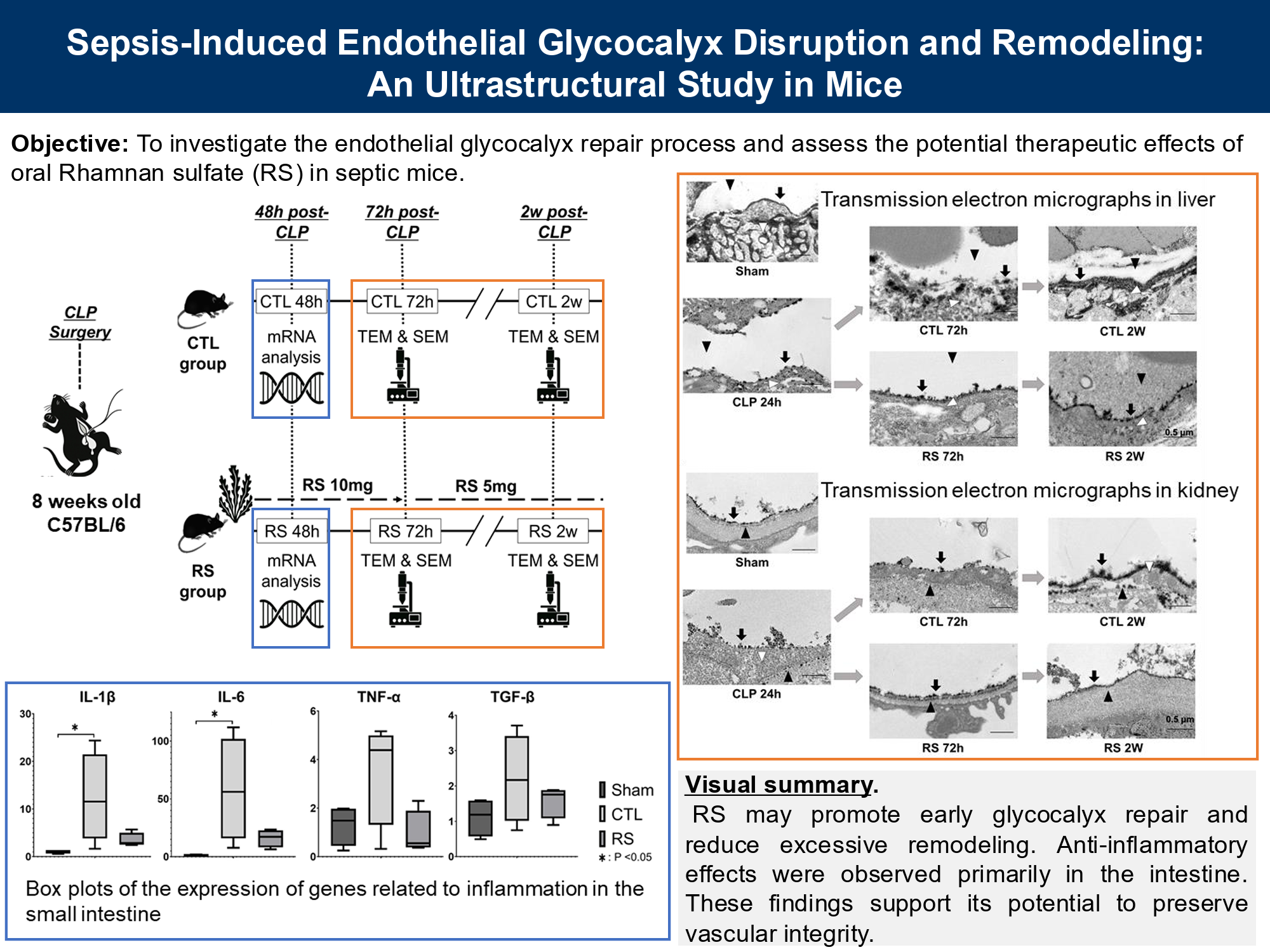
This experimental study examined endothelial glycocalyx injury and recovery during sepsis using a cecal ligation and puncture mouse model. Electron microscopy of liver and kidney microvasculature showed marked glycocalyx disruption at 24 hours that persisted to 72 hours. By two weeks, spontaneous recovery occurred with excessive thickening, suggesting structural remodeling rather than simple restoration. Treatment with rhamnan sulfate accelerated structural recovery: glycocalyx continuity improved by 72 hours and approached normal morphology by two weeks. Rhamnan sulfate was also associated with higher 7-day survival (55% vs 25%) and trends toward lower inflammatory and glycocalyx-degrading gene expression, although circulating biomarkers were not significantly changed. The findings remain preclinical.