
ICMx – Article of the week
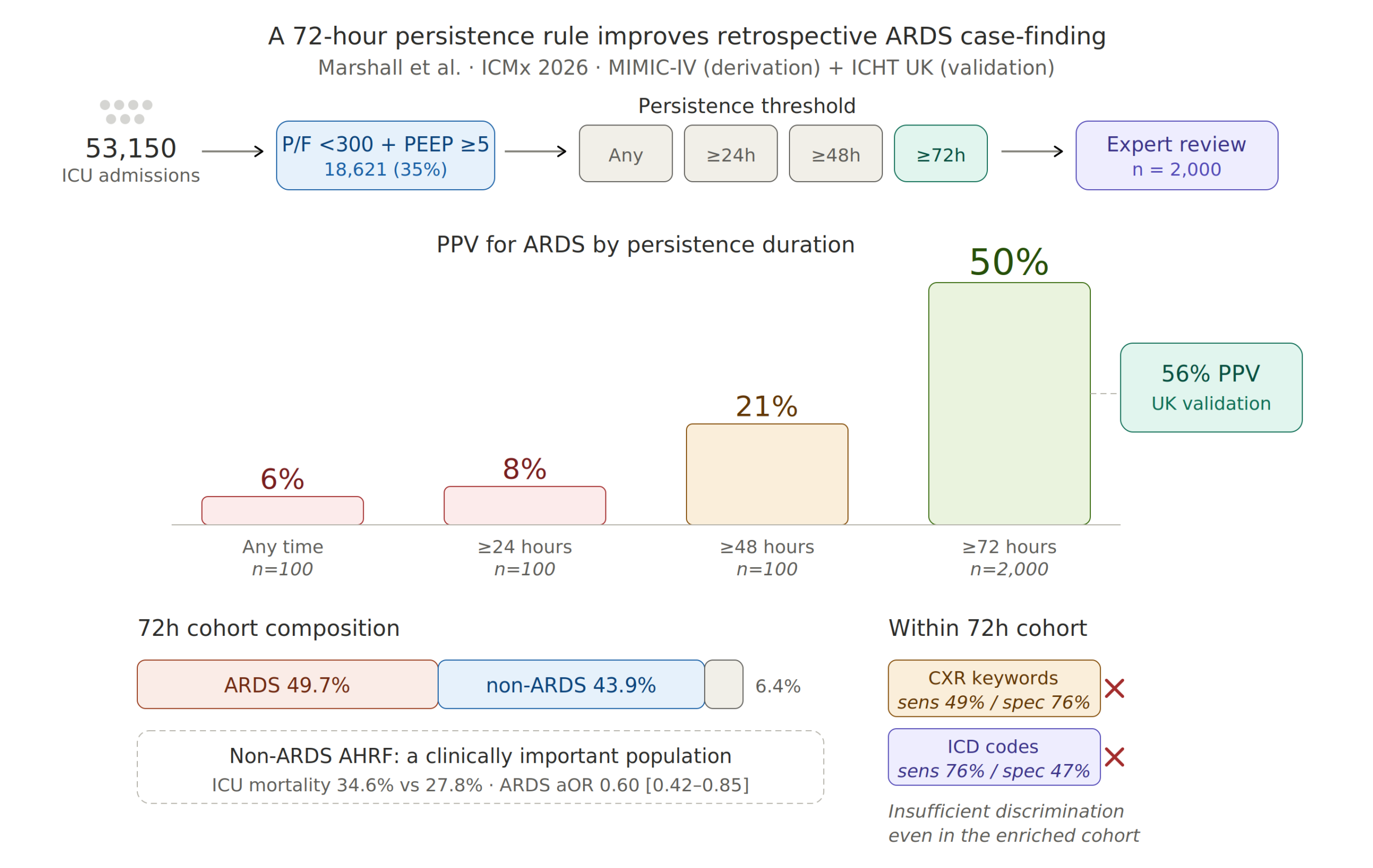
Improving retrospective ARDS case-finding using a simple 72-h physiologic persistence rule
Authors: Dominic C. Marshall, Brijesh V. Patel, Anthony C. Gordon, David B. Antcliffe, Sonali Parbhoo, Matthieu Komorowski
Retrospective studies frequently identify acute respiratory distress syndrome (ARDS) using single-time-point Berlin physiologic criteria; however, transient hypoxaemia is common in critically ill patients and may lead to substantial misclassification. This retrospective cohort study evaluated whether a 72-hour persistence criterion for hypoxaemia improves the accuracy of retrospective ARDS identification and assessed the additional diagnostic value of radiology keyword searches and ICD codes. Using the MIMIC-IV database for derivation and a large UK ICU cohort for external validation, patients meeting Berlin physiologic criteria for at least 72 hours underwent expert adjudication based on detailed review of clinical records, imaging, and echocardiography. The application of a 72-hour persistence rule substantially enriched the cohort for true ARDS cases compared with shorter persistence thresholds or isolated physiologic measurements. Nevertheless, a considerable proportion of patients remained misclassified despite physiologic screening. Within the enriched cohort, radiology keyword searches demonstrated limited sensitivity and moderate specificity, whereas ARDS-specific ICD codes showed higher sensitivity but poor specificity.
These findings indicate that Berlin physiologic criteria alone are insufficient for retrospective ARDS identification and that a ≥72-hour persistence rule represents a pragmatic strategy to enrich ARDS cohorts rather than a definitive retrospective diagnostic approach.