The Global Connect Group (GCG) aims to consolidate and strengthen ESICM efforts to help improve intensive care medicine in low- and middle-income countries.
The Global Connect Group comprises 7 to 10 members, selected through a transparent process.
The Global Connect Group is led by Pr. Sheila Myatra (India).
The Global Connect Group will structure its activities around four strategic areas:
The group’s activities will be accessible to all ESICM members interested in global health, with open calls for participation in specific projects and discussions.
Intensive Sepsis Education for Resource-Limited Settings
27–28 November 2026 – Abuja, Nigeria
The European Society of Intensive Care Medicine (ESICM), in collaboration with the National Hospital Abuja, will deliver a two-day ALIVE Sepsis Course, bringing together approximately 150 healthcare professionals for expert-led training focused on the early recognition, diagnosis and evidence-based management of sepsis, with the aim of improving patient care and outcomes.
Organised by: European Society of Intensive Care Medicine (ESICM)
Faculty: Up to 6 international ESICM expert faculty members, together with local faculty
Format: 2.5-day interactive course combining theoretical education, case-based learning and clinical/bedside teaching
Venue: National Hospital, Abuja, Nigeria
At the end of the course, participants should be able to:
Day 1 – Sepsis Recognition and Initial Management
08:30–09:00 Registration
09:00–09:20 Welcome and introduction to the course
09:20–09:45 Pre-course assessment
09:45–10:30 Sepsis: definitions, burden and challenges in resource-limited settings
10:30–11:15 Early recognition of sepsis and the deteriorating patient
11:15–11:30 Break
11:30–12:15 Initial assessment and stabilisation of the patient with sepsis
12:15–13:00 Interactive case: the first hour of sepsis management
13:00–14:00 Lunch
14:00–14:45 Diagnostic approach and microbiological sampling
14:45–15:30 Antimicrobial therapy and antimicrobial stewardship
15:30–15:45 Break
15:45–16:30 Fluid resuscitation and reassessment
16:30–17:15 Monitoring patients with sepsis in resource-limited settings
17:15–17:45 Interactive case discussion 17:45–18:00 Key learning points
Day 2 – Organ Support and Clinical Management
08:30–08:45 Review of Day 1
08:45–09:30 Septic shock: recognition and haemodynamic assessment
09:30–10:15 Vasopressors and cardiovascular support
10:15–10:30 Break
10:30–11:15 Acute respiratory failure in sepsis
11:15–12:00 Oxygen therapy and respiratory support
12:00–12:45 Acute kidney injury and other sepsis-associated organ dysfunction
12:45–13:45 Lunch
13:45–14:30 Source identification and source control
14:30–15:15 Monitoring response to treatment and recognising treatment failure
15:15–15:30 Break
15:30–17:00 Clinical / Bedside Teaching Rotations
– Structured assessment of the critically ill patient
– Haemodynamic assessment
– Respiratory assessment and oxygen delivery
– Monitoring and reassessment
– Clinical decision-making in sepsis
17:00–17:45 Multidisciplinary sepsis case simulation and debrief
17:45–18:00 Key learning points
ISOREA (2017)
International survey on the Structure and Organisation of the Intensive Care Unit (ISOREA). The objective was to evaluate the current structure and organisation of ICUs in a very large sample of countries with low, middle and high income, given the scarcity of data in this area.
This survey was endorsed by the Société de Réanimation de Langue Française (SRLF), by the Subsaharian Society for Anesthesia and Intensive Care (SARANF) and by ESICM.
It was organised by Pr. Armand MEKONTSO DESSAP, Medical ICU, Henri Mondor University Hospital, Créteil, France
Mekontso Dessap A. Frugal innovation for critical care.
Intensive Care Med. 2019 Feb;45(2):252-254. doi: 10.1007/s00134-018-5391-6. Epub 2018 Oct 4.
Ary Serpa Neto et al. Ventilatory support of patients with sepsis or septic shock in resource-limited settings.
Sepsis Management in Resource-limited Settings. Cham (CH): Springer; 2019. Chapter 6. 2019 Feb 9.
Otto Schell C., Gerdin Wärnberg M.et al. The global need for essential emergency and critical care.
Crit Care. 2018 Oct 29;22(1):284. doi: 10.1186/s13054-018-2219-2.
Flavia R. Machado et al. Trying to Improve Sepsis Care in Low-Resource Settings.
JAMA. 2017 Oct 3;318(13):1225-1227. doi: 10.1001/jama.2017.10547.
Benbenishty J et al. The migrant crisis and the importance of developing cultural competence in the intensive care unit.
Nurs Crit Care. 2017 Sep;22(5):262-263. doi: 10.1111/nicc.12313.
How can a functional intensive care system be established in these settings?
In this icTV interview, Martin Dünser answers these important questions and updates us on the initiatives of ESICM and its partners in resource-poor settings.
In this interesting icTV interview, Jeremy Farrar, Oxford University Professor and Director of the UK’s Wellcome Trust discusses the implications of emerging infections on intensive care, and provides some prognostic advice on preparing for future pandemics.
Global health expert Majid Ezzati provides an interesting overview of the current state of global health and explains his vision for how intensive care clinicians can play a greater role in effecting positive change.
In collaboration with the ESICM Global Intensive Care group, led by Prof. Mervyn Mer, the first ALIVE project was a focused, theoretical and practical training course developed to improve knowledge of sepsis and global infections: Sepsis Prevention and Management Course in Low- and Lower-Middle Income Countries (LMIC).
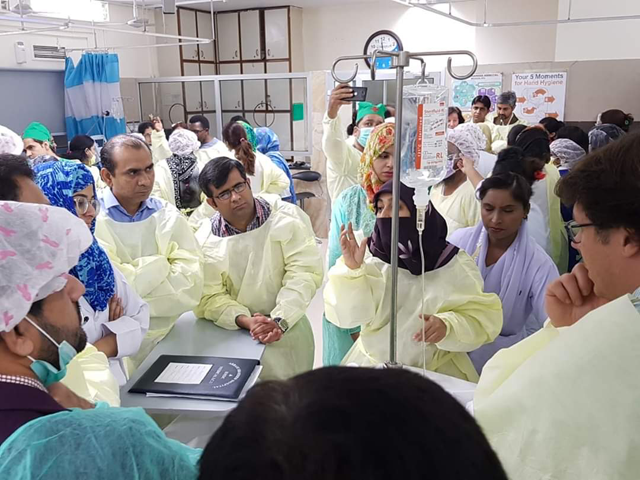
More than 40 healthcare professionals from across Uganda attended a two‑day sepsis training in Kampala on 10–11 June 2019. The programme combined interactive lectures and ICU bedside teaching led by local and international faculty and was met with strong engagement and enthusiastic feedback. The initiative highlights ESICM’s commitment to meaningful global education, made possible through close collaboration with our Ugandan hosts.
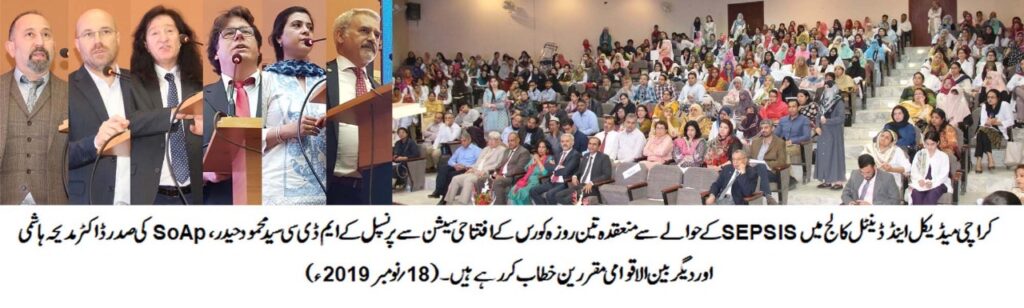
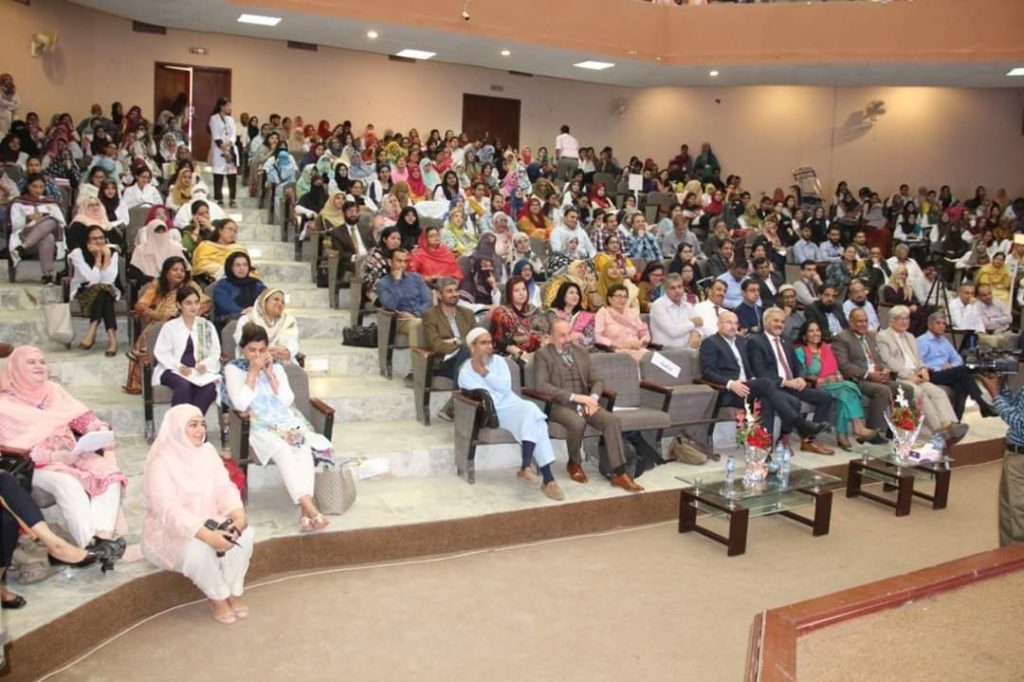
ALIVE supported its first sepsis management training course in Pakistan in November 2019 at the Medical and Dental College in Karachi. The two‑day interactive programme attracted 450 participants from a wide range of medical and nursing disciplines and was delivered by international and local faculty. A subsequent bedside teaching session in the medical ICU at Abbasi Shaheed Hospital involved 50 attendees. The course was met with enthusiastic feedback, and ESICM extends its sincere thanks to the local faculty, hosts, and authorities for their exceptional support.
Follow‑up training in Pakistan and additional courses in the Caribbean and Mongolia are planned.