
New Publication | Parenting, Pregnancy and Work–Family Balance in Intensive Care: ESICM Survey and Call for Action
Authors: Gaetano Scaramuzzo, Jekaterina Jagodzinska-Peškova, Giacomo Grasselli
The ICU is one of medicine’s most demanding environments — but how does it shape the personal lives of those who work within it? A new article published in Intensive Care Medicine sheds light on a topic that has long remained in the shadows of critical care research: the intersection of ICU work, pregnancy, parenting, and work–family balance.
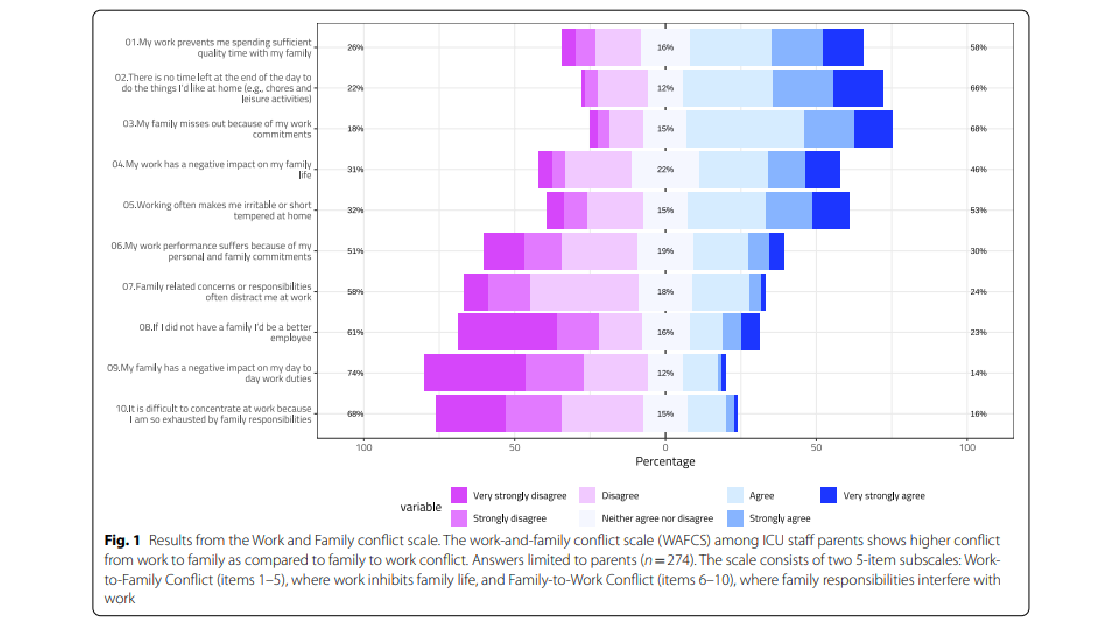
Conducted on behalf of the ESICM NEXT Committee, the N&AHP Committee, and the Diversity & Inclusion Group, the survey gathered responses from 420 ICU professionals across 32 countries, offering one of the most comprehensive explorations of this issue to date. The findings are striking: 60% of non-parents reported that working in the ICU had a strong impact on their decision to have children, while nearly half of all respondents felt that parenthood had limited their career opportunities. Support for pregnancy and parenthood was reported as inconsistent, insufficient, and often absent. Notably, 43% of respondents received no childcare support from their employer, and 60% disagreed that their employer adequately supported parenthood. Parental leave also revealed possible gender differences, with 88% of mothers taking leave compared to 48% of fathers.
The results paint a candid picture of the structural barriers that ICU professionals, particularly women and junior staff, continue to face when navigating family life alongside their clinical responsibilities. They also highlight a clear need for stronger institutional policies, ICU-specific guidance during pregnancy, and proactive organisational support across all stages of parenthood.
At ESICM, we believe that caring for our professionals is inseparable from caring for our patients. This publication is not just a scientific contribution — it is a call for action, and a reminder that building a truly excellent intensive care community means building one where every professional can thrive, both inside and outside the ICU.