
ICMx – Article of the week
The therapeutic potential of high-dose inhaled nitric oxide for antimicrobial effects: a narrative review and future directions
Authors: Lorenzo Berra, Nikolay Kamenshchikov, Asher Tal, Bijan Safaee Fakhr, Emanuele Rezoagli, Rachel Thomson, Binglan Yu and the High-Dose Inhaled Nitric Oxide Investigators.
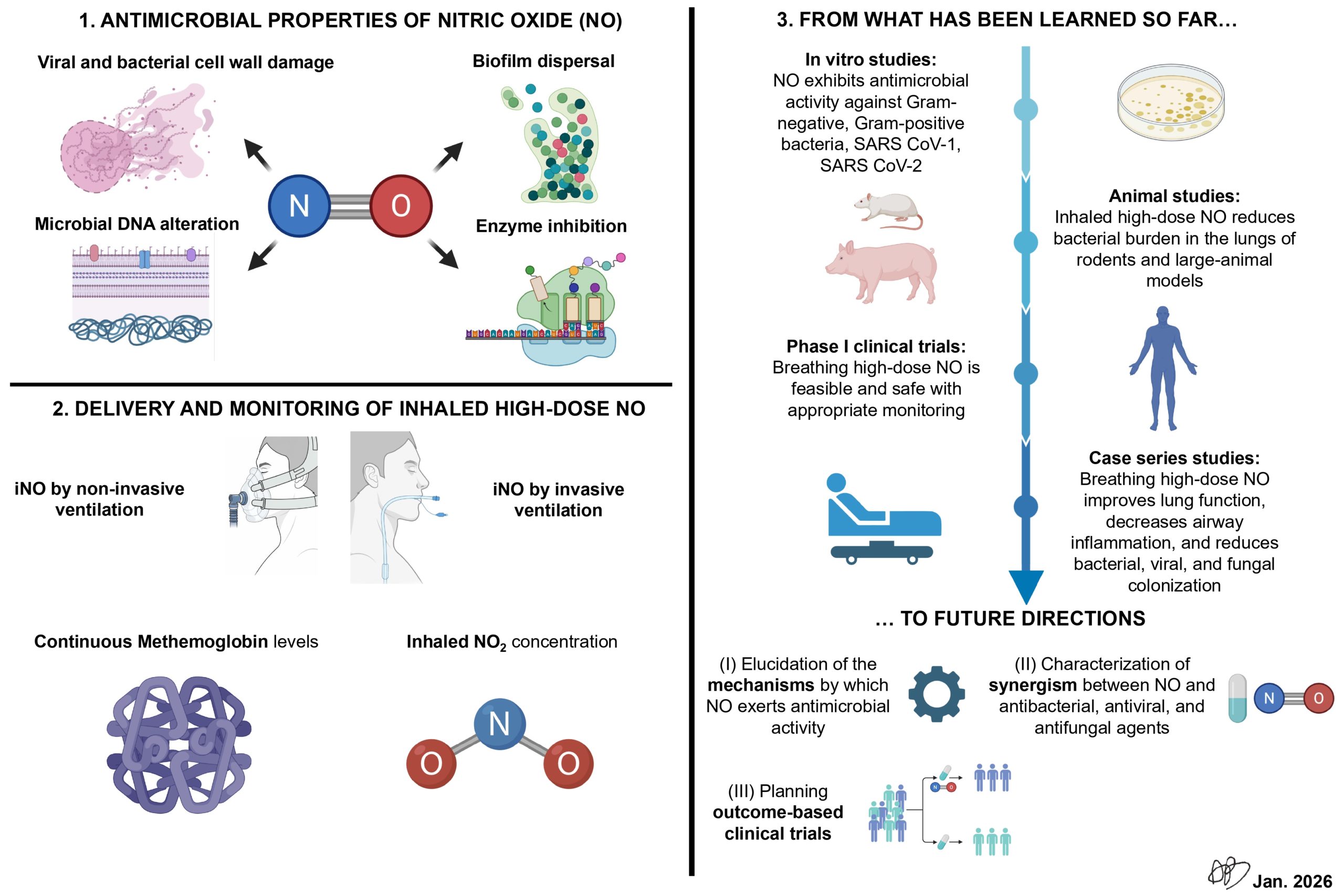
Inhaled nitric oxide (iNO), originally used as a selective pulmonary vasodilator, is now being explored as a potential antimicrobial treatment at higher doses (>20 ppm). In addition to its known effects on blood flow, increasing translational research indicates that high-dose iNO could have wide-ranging activity against bacteria, viruses, fungi, and parasites.
This narrative review combines data from mechanisms, laboratory safety tests, Phase I trials, and 27 mainly early-stage clinical studies that assess high-dose iNO in lower respiratory infections. These include drug-resistant bacterial pneumonia, COVID-19, nontuberculous mycobacterial disease, and bronchiolitis. In these settings, high-dose iNO has shown a reassuring safety profile in both intensive care and outpatient environments.
Proposed mechanisms involve directly killing microbes, disrupting biofilms, modulating the host immune response, and improving mucociliary clearance. While definitive evidence of effectiveness remains limited, preliminary translational and early clinical data justify further research. Well-designed trials should focus on identifying optimal dosing, delivery methods, safety profiles, and relevant clinical outcomes.
High-dose inhaled nitric oxide may serve as a promising adjunctive, pathogen-agnostic strategy for treating drug-resistant lung infections and acute respiratory failure.