
ICMx – Article of the week
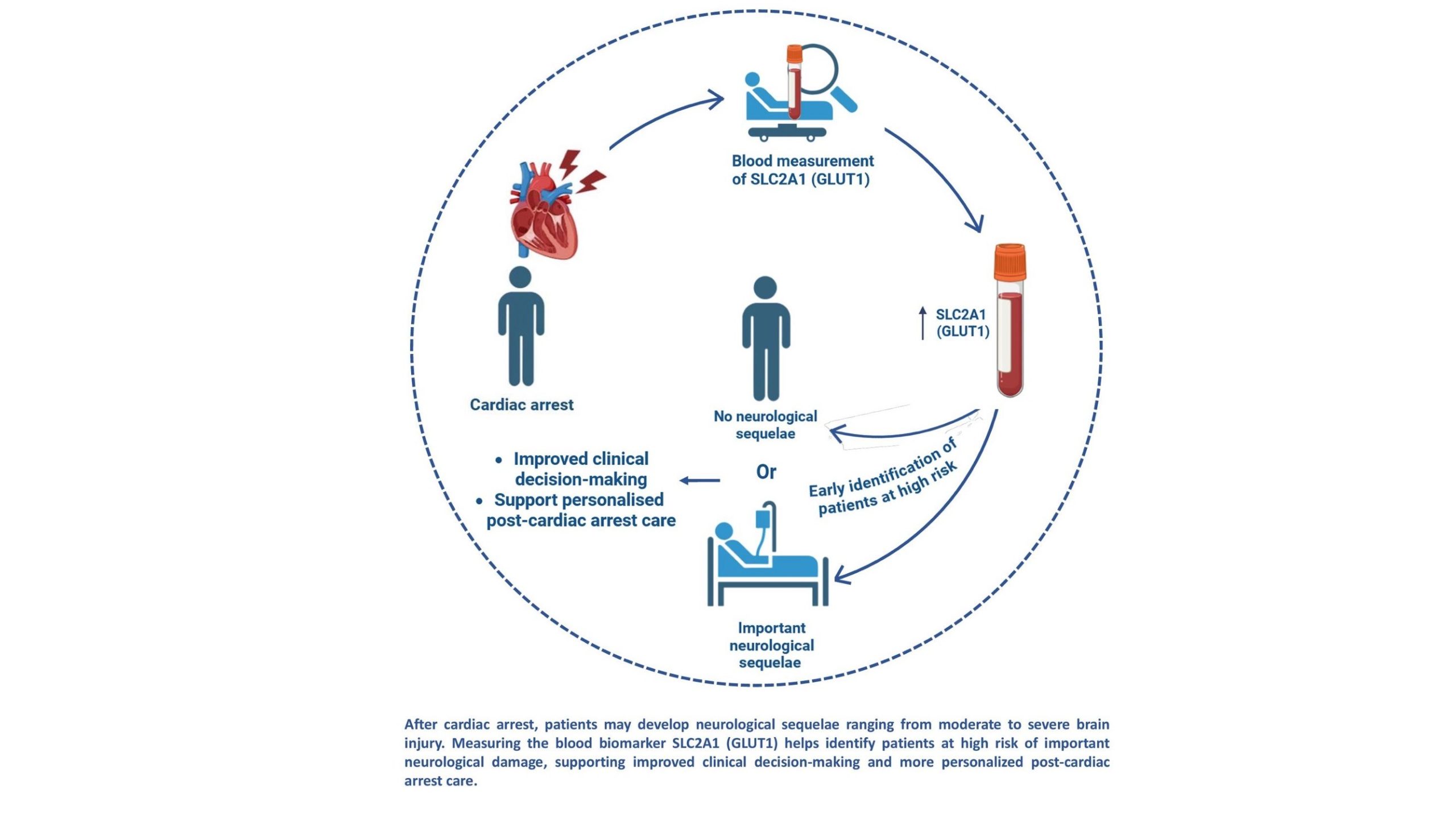
Direct RNA sequencing identified solute carrier family 2 member 1 to improve neurological outcome prediction after cardiac arrest
Authors: Victoria Stopa, Miron Sopic Lu Zhang, Andrew Lumley, Pascal Stammet, Claudia Schrag, Ondrej Smid, Christian Hassager8, Jesper Kjaergaard, Tommaso Pellis, Janneke Horn, Michael Kuiper, Jan Hovdenes, Christian Rylander, Matt P. Wise, Niklas Nielsen and Yvan Devaux
Cardiac arrest is a significant cause of death and neurological disability, and early prediction of neurological outcome remains difficult. This study explored whether blood-based molecular biomarkers could improve prognostic assessment and provide insight into brain injury after cardiac arrest. Whole-blood samples (collected 48 hours after return of spontaneous circulation) were analysed in patients from the North Pole cohort and validated in the multicenter TTM trial, with outcomes assessed at 6 months using the Cerebral Performance Category (CPC) scale.
The gene SLC2A1, encoding the glucose transporter GLUT1, was found to be significantly upregulated in patients with neurological injury or death compared with neurologically intact survivors. This association was consistently observed across cohorts and remained an independent predictor of poor neurological outcome, with incremental prognostic value beyond standard clinical models. These findings suggest that blood SLC2A1 levels may serve as a promising biomarker for predicting neurological outcomes after cardiac arrest.